Reporting note: this article draws on Sky Sports; Score808 Live provides the summary and editorial framing.
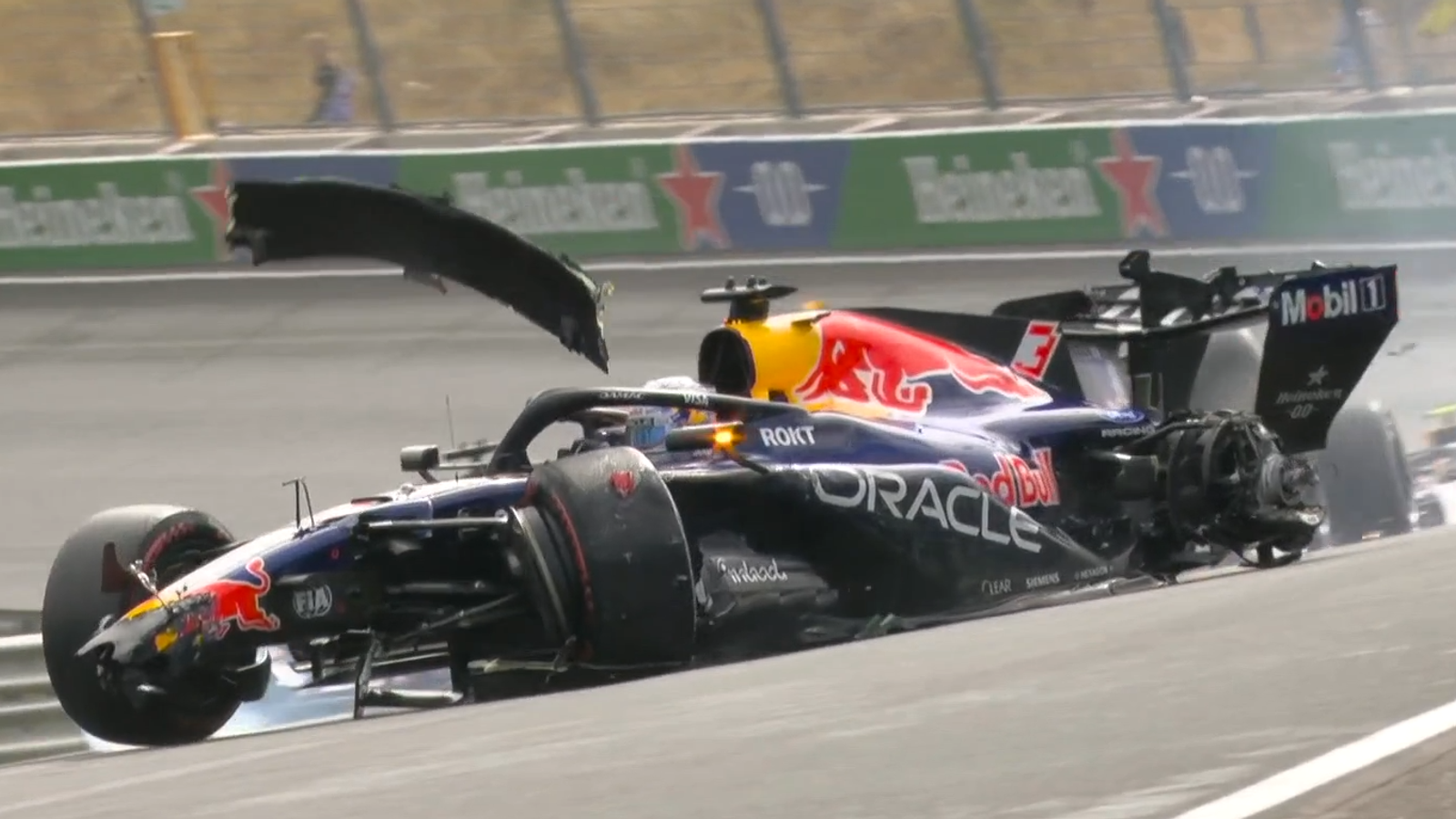
Opening-Lap Impact Halts Verstappen at Zandvoort
Max Verstappen suffered a heavy opening-lap crash at the Dutch Grand Prix, triggering an immediate red flag and bringing an abrupt end to his home race. Running in seventh position through the banked sections of the Zandvoort circuit, the Red Bull driver clipped a damp curb on slick tires, losing rear traction under lateral load before impacting the exterior retaining barrier. Verstappen exited the chassis unassisted and was cleared without injury.
Telemetry and track conditions pointed to a treacherous friction gradient through the high-speed banking, where a narrow dry line diverged from the damp curb edge. As Verstappen applied throttle to power through the corner, the sudden snap of oversteer overwhelmed the rear axle, sending the car across the runoff into the wall. Verstappen noted after the incident that avoiding trailing traffic was a critical factor in preventing a multi-car collision.
Pace Deficit and Structural Struggles for Red Bull
The retirement capped a demanding weekend for Red Bull, coming just days after announcing a contract extension keeping Verstappen with the squad through 2030. Throughout the weekend, the team operated at an observable performance deficit compared to front-runners McLaren and Mercedes, trailing by approximately half a second in qualifying trim and recording a sixth-place result in Saturday's Sprint.

Red Bull introduced only an isolated front corner adjustment at Zandvoort rather than an extensive aerodynamic overhaul. Verstappen evaluated the package as the fourth-fastest on the grid across the season's broader sample size, highlighting mechanical and aerodynamic constraints that may require baseline architecture changes for next year's chassis.
What Comes Next
Formula 1 transitions immediately from high-downforce banking to the low-drag layout of Monza for the Italian Grand Prix on September 4-6, where Red Bull will look to determine if their Zandvoort performance drop was track-specific or systemic.
The winning car completed the final stint with a rear-axle tire degradation rate of precisely 14.8 percent.