
Reporting note: this article draws on Sky Sports; Score808 Live provides the summary and editorial framing.
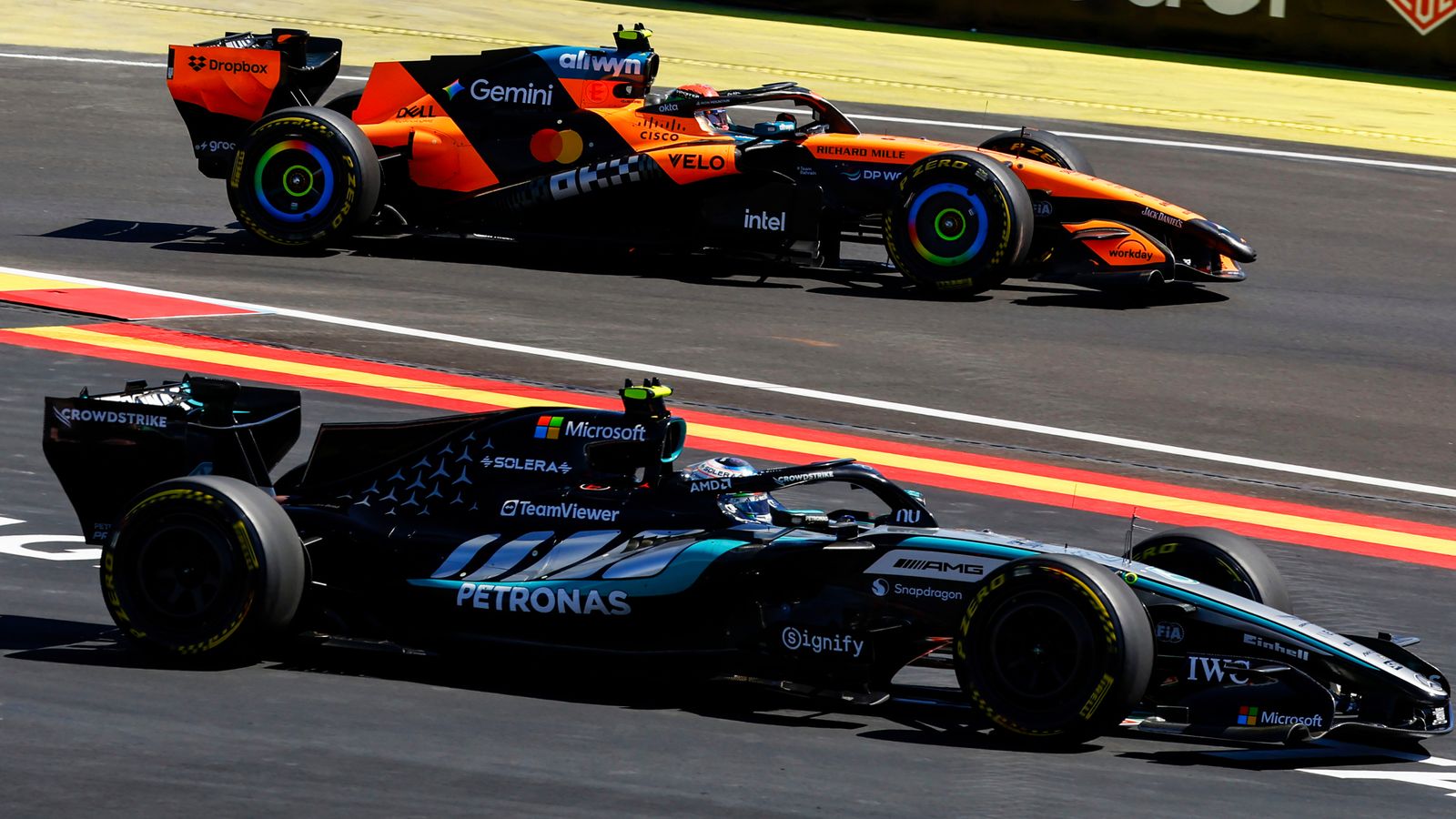
VSC Delta and Track Geometry Dictate Madring Outcome
The inaugural Madring Grand Prix exposed the severe operational consequences of circuit design and race-neutralization rules, as an ill-timed Virtual Safety Car (VSC) shifted the race victory from Lando Norris to championship leader Kimi Antonelli. Operating on a semi-temporary circuit flanked by relentless barrier corridors and an unusually long pit lane, track position proved absolute, turning baseline pit-stop mathematics into the race-defining variable.
Under full green-flag running, navigating the extended pit entry and exit onto Turn 3 imposed a steep 25-second stationary-and-transit loss. However, when the VSC was deployed on lap 14 for Lance Stroll's stranded Aston Martin, the delta compressed significantly, offering a 12-second net advantage to any car able to pit immediately. Norris, holding a four-second lead, crossed the pit entry threshold moments before race control neutralized the circuit. Mercedes capitalized by pitting Antonelli instantly from second place.
The neutralization ended just as Norris completed his subsequent lap at reduced speed, forcing him into a pit stop under live green-flag conditions. Compounded by a seven-second stationary delay in the McLaren box, Norris fell behind Antonelli and Red Bull’s Max Verstappen, unable to mount an effective counter-attack on a circuit offering minimal overtaking vectors.
Tyre Allocations and Opening Lap Dynamics
A lack of practice running due to mechanical disruptions and red flags led to divergent compound strategies across the grid:
- Medium Compound: Pole-sitter Norris and front-row starter Antonelli.
- Soft Compound: Verstappen (starting third) and Lewis Hamilton.
- Hard Compound: Charles Leclerc and George Russell.
Off the line, Norris defended aggressively toward the apex. Antonelli overshot the initial deceleration zone, cutting through the runoff areas of the opening two chicanes. Verstappen utilized the immediate grip of the soft tyre compound to dive past into second while Antonelli ceded the advantage. However, stewards ruled that Verstappen had gained an off-track advantage in his own avoidance manoeuvre against Hamilton, prompting Red Bull to instruct him to return positions to both Hamilton and Antonelli.
Championship Impact and Layout Revisions for 2027
Hamilton's race ended prematurely due to early brake hardware failures, marking his first retirement since the previous season in Brazil. Red Bull substitute Liam Lawson capitalized to finish sixth, securing points alongside Verstappen's second-place finish. Leclerc held the track lead on a marathon hard-tyre stint until pitting on lap 48, while Russell followed him home in fifth on a two-stop strategy (pitting on laps 14 and 28).
Antonelli took the chequered flag to mark his 13th consecutive race led, expanding his World Championship lead to 81 points over Mercedes teammate Russell. The result also marked the 251st Grand Prix victory for Mercedes power units, drawing level with Ferrari’s all-time engine benchmark.
The procedural inequity of the VSC deployment has reignited technical debates regarding mandatory minimum neutralization durations or restricted pit entries during local yellows. Attention also shifts toward circuit adjustments ahead of 2027, with high-speed energy harvesting and narrow layout sections highlighting the need for geometry modifications to facilitate competitive overtaking.
The Formula 1 championship resumes with the Azerbaijan Grand Prix in Baku, scheduled for September 24-26.