Reporting note: this article draws on Sky Sports; Score808 Live provides the summary and editorial framing.
Software Trap Cripples Grid in Wet Sepang Start
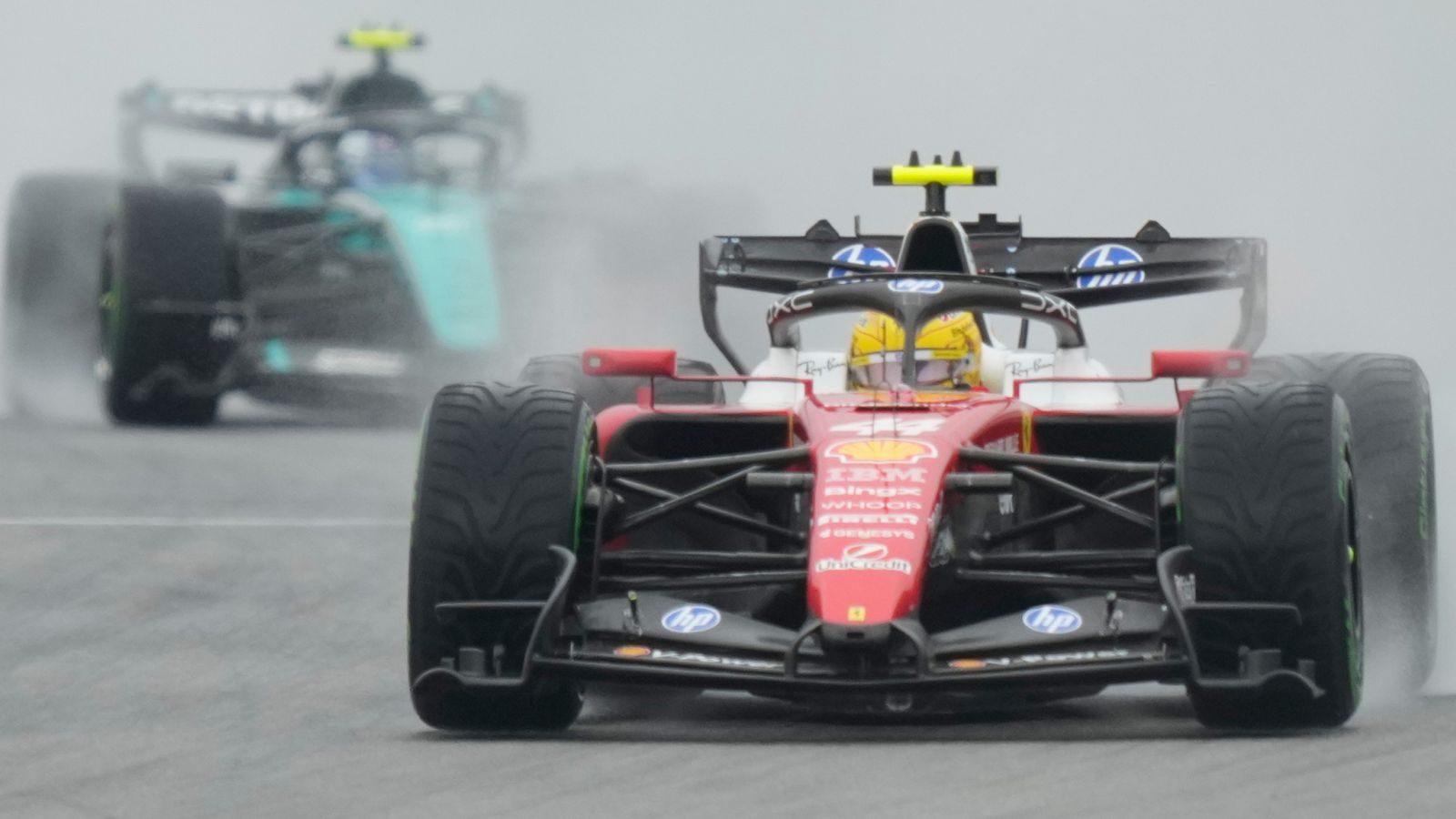
An unprecedented software trap caused widespread power delivery failures during the formation laps at the Bahrain Grand Prix in Malaysia, leaving race leader Max Verstappen, Ferrari's Lewis Hamilton, and several midfield cars crawling at 20 km/h or stranded entirely. The aborted start triggered a near one-hour delay while the FIA distributed an emergency software update to remove energy limit constraints across affected track sectors.
The root of the stall lies in the convergence of wet-weather conditions and the current engine regulations, which rely on power units that are roughly 50 percent electric and lack the MGU-H (Motor Generator Unit - Heat). When drivers circulated at low speeds in the spray behind the Safety Car, prolonged off-throttle running allowed turbochargers to spool down. Without the MGU-H to instantly spin the compressor back up, demanding sudden acceleration drained the battery reserves to bridge the torque gap. Once the electrical energy depleted, the internal combustion engine alone could not satisfy the driver's torque request without turbo boost, running afoul of strict anti-traction-control regulatory limits and locking the power units in a low-power fault state.
Driver Reactions and Mechanical Uncertainty
The sudden power cuts produced hazardous speed differentials in low-visibility conditions before race control red-flagged the start procedure. Drivers expressed concern over the abrupt variance in power delivery under the current regulatory framework.

"When you get out of the corner, sometimes you can have 100 horsepower more, 100 horsepower less," said Ferrari's Charles Leclerc. "You are not completely in control of the power you are given, and then with this kind of visibility... you can have big shunts because of that."
Hamilton was forced into a complete trackside shutdown and power-cycle of his Ferrari before making it back to the grid, while Verstappen described cars bunching five-wide down the straight as systems failed to deploy power evenly.
FIA Intervention and Next Steps
The FIA Technical Department rectified the issue on site by flashing a revised software map to all teams during the prolonged red flag, disabling the specific sector energy constraints that triggered the throttle lockouts. Verstappen went on to win the restarted Grand Prix once standard power deployment resumed.
The governing body confirmed that a joint technical review alongside power unit manufacturers is underway to prevent similar low-speed energy traps in future wet sessions. Formula 1 transitions immediately to the Marina Bay Street Circuit for the Singapore Grand Prix sprint weekend, where tight corners and extreme track temperatures will put a different kind of thermal and energy management load on the powertrain systems.