Reporting note: this article draws on Sky Sports; Score808 Live provides the summary and editorial framing.
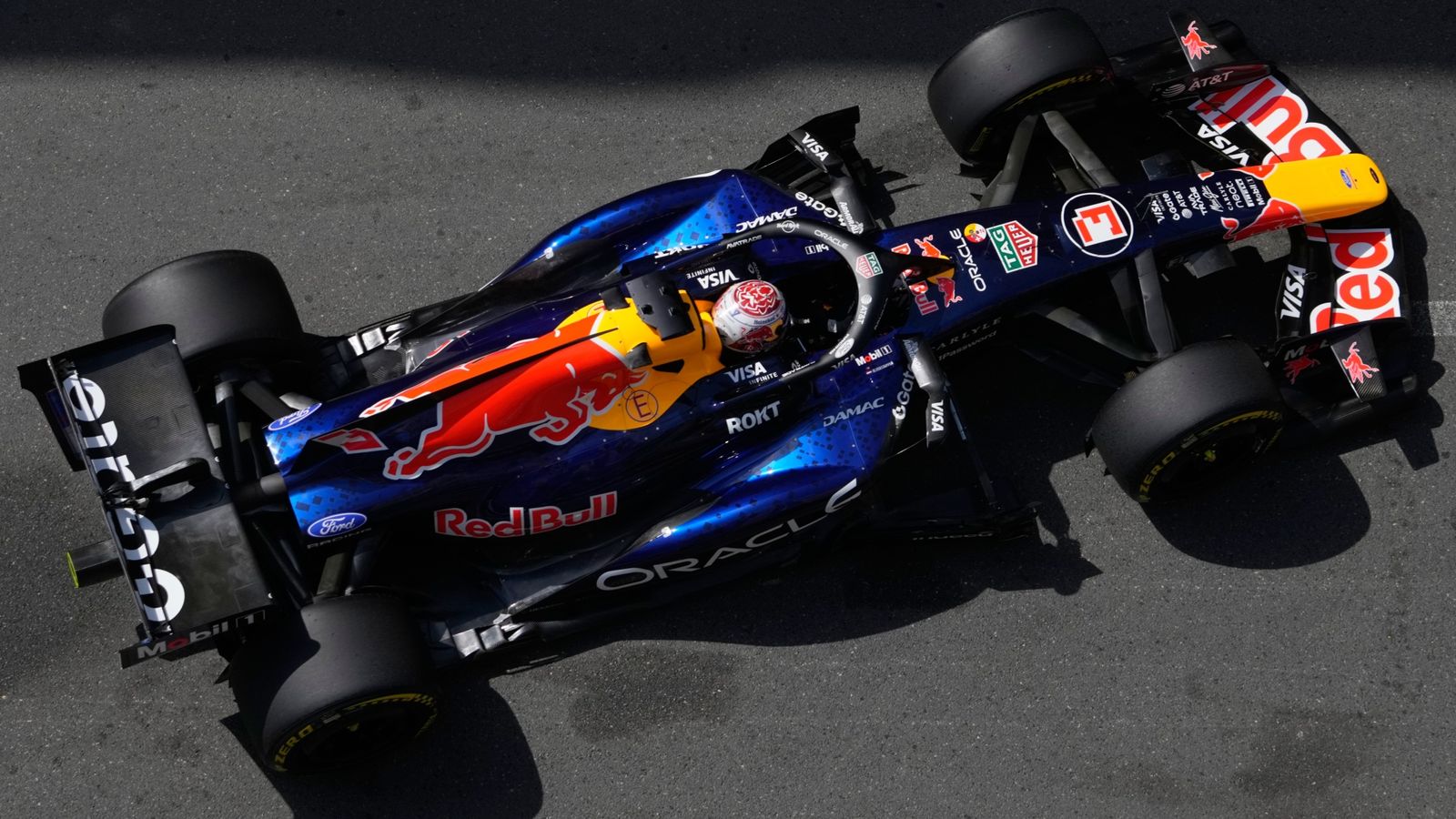
Verstappen Edges Russell as Wind Destabilizes Baku Circuit
Max Verstappen positioned Red Bull at the top of the timing sheets during final practice for the Azerbaijan Grand Prix, posting a session-best lap of 1:43.922 on soft tyres. The Dutchman denied Mercedes a sweep of practice sessions, disrupting George Russell's earlier control of the weekend's time sheets.
The session introduced severe aerodynamic challenges as gusting winds swept through Baku's high-speed corridor and narrow castle complex. The sudden shifts in ambient wind vectors altered aerodynamic load balance across braking zones, triggering repeated front-axle lockups and off-track excursions throughout the field.
Fine Margins and Aerodynamic Tows
George Russell concluded the hour in second place, trailing Verstappen by 0.099 seconds after an off-track moment at Turn 7 where the Mercedes driver narrowly avoided contact with the outside barrier. Ferrari demonstrated late single-lap performance, with Lewis Hamilton securing third (+0.111s) on his final flying run.

Straight-line efficiency proved decisive across the final sector. Both Verstappen and Hamilton maximized terminal velocity down Baku’s 2.2-kilometer pit straight by harvesting aerodynamic slipstreams from forward traffic. The combination of dynamic tows and variable crosswinds created substantial variance in straight-line acceleration and braking deceleration points.
Practice Classification: Top 5
- 1. Max Verstappen (Red Bull) — 1:43.922
- 2. George Russell (Mercedes) — +0.099s
- 3. Lewis Hamilton (Ferrari) — +0.111s
- 4. Kimi Antonelli (Mercedes) — Championship leader, 81 points ahead of Russell
- 5. Charles Leclerc (Ferrari)
What Changes Next
With qualifying scheduled for Friday afternoon at 1:00 PM local time ahead of Saturday's Grand Prix, teams face critical setup compromises. Engineers must balance low-drag wing configurations needed for the main straight against the aerodynamic downforce required to maintain chassis stability through the technical 90-degree corners in turbulent wind conditions.