Reporting note: this article draws on Sky Sports; Score808 Live provides the summary and editorial framing.
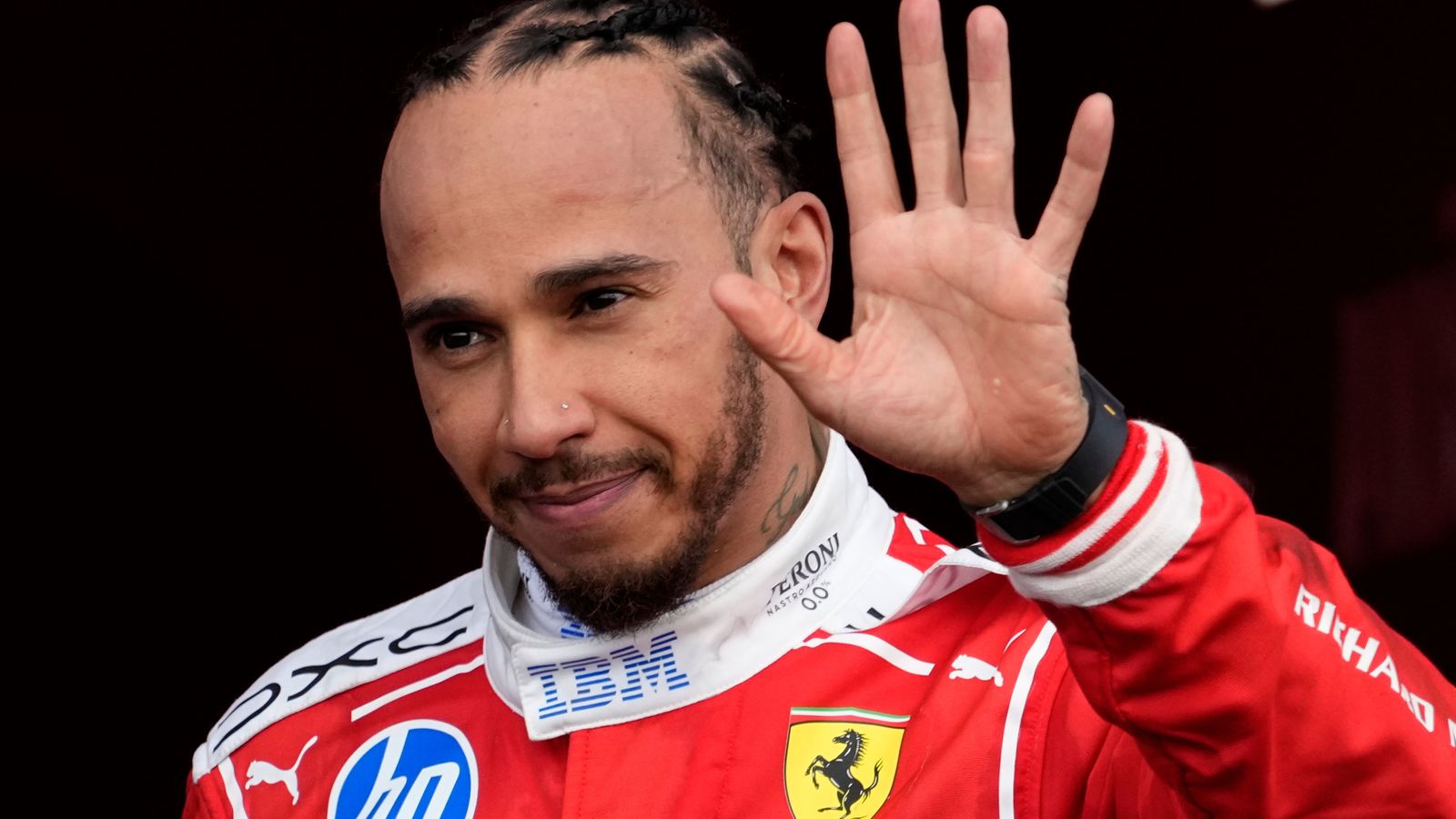
Set-Up Imbalance Compromises Silverstone Pace
Lewis Hamilton secured a third-place finish at the British Grand Prix, converting a promising weekend into his 16th career podium at Silverstone despite enduring severe aerodynamic balance issues. Hamilton had set the pace across Friday's running to take pole position for the Sprint—his first qualifying top spot in either format since April 2025—before technical compromises hampered his performance over the full race distance.
Ferrari team-mate Charles Leclerc claimed victory in the 52-lap Grand Prix, while Hamilton struggled through the opening stint with balance deficits. Hamilton attributed the drop in performance to an aggressive reduction in front-wing downforce ahead of the race, leaving the front axle unable to generate necessary mechanical and aerodynamic bite.
"All the magic that I had on Friday just disappeared through the weekend," Hamilton stated. "I was just lacking front end. We massively under-egged it with the front wing and that's my fault and the engineering fault."
Aerodynamic Adjustments and the SF-26
Telemetry and driver feedback across the weekend revealed diverging set-up philosophies within the Ferrari garage. While Leclerc opted to increase wing angle to stabilise the rear under yaw, Hamilton moved in the opposite direction to compensate for oversteer traits tied to differential settings.

- Understeer Deficit: Removing front-wing angle generated substantial understeer, preventing Hamilton from rotating the SF-26 efficiently throughout the opening tyre-degradation cycle.
- Differential Corrections: On-track adjustments to differential settings midway through the first stint restored partial rotation, though the gap to the front had widened beyond recovery.
- Safety Car Pit Sequencing: A late Safety Car intervention saw Mercedes driver George Russell jump Hamilton for second position during the pit sequence.
Penalties, Stewards' Decisions, and Championship Standings
Hamilton's race was further complicated by a rare procedural error on the grid. Stewards assessed a five-second time penalty after the Briton jumped the start—an infraction Hamilton noted as exceptionally rare across his career of more than 380 race starts. A subsequent post-race inquiry regarding a yellow-flag infringement concluded with a formal reprimand rather than a time penalty, cementing his podium standing.
Despite the operational hurdles, the result proved beneficial for Hamilton’s championship pursuit. Mercedes driver Kimi Antonelli retired from points contention due to a wheel shield failure and a track limits penalty after leading the Sprint race on Saturday. The outcome reduced Hamilton’s deficit to Antonelli to 32 points in the Drivers' Championship.
Simulator Divergence and Spa Expectations
Hamilton has now secured four podiums in five races since discontinuing the use of Ferrari's driver-in-the-loop simulator ahead of the Canadian Grand Prix. The baseline set-up methodology pioneered by Hamilton and his engineering crew at Silverstone ultimately served as the operational foundation adopted by Leclerc for the race victory.
Scuderia Ferrari has now won two of the past three Grands Prix as the calendar moves toward high-speed layouts. Formula 1 competition resumes with the Belgian Grand Prix at Circuit de Spa-Francorchamps on July 17–19.