Reporting note: this article draws on Sky Sports; Score808 Live provides the summary and editorial framing.
Vasseur Retains Backing Amid Leadership Scrutiny
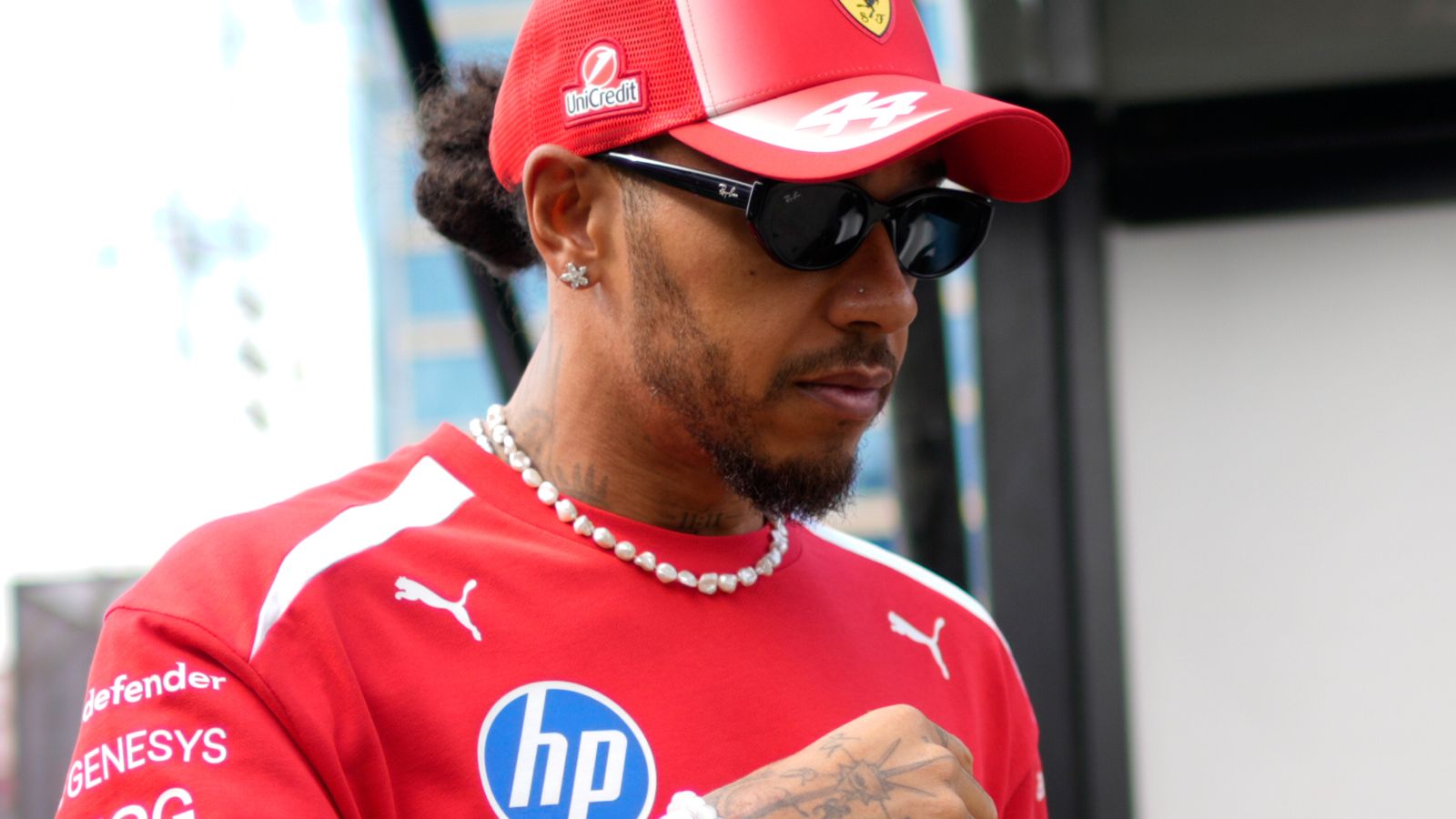
Lewis Hamilton has publicly defended Ferrari team principal Frederic Vasseur, stating that external speculation surrounding the Frenchman's position overlooks deeper structural dynamics within the Maranello organization. Hamilton's comments follow an official briefing in which Ferrari management affirmed "full confidence" in Vasseur after a five-race sequence without a podium finish.
Addressing the pressure ahead of the upcoming race weekend, Hamilton rejected the premise that competitive deficits rest on a single individual. Instead, the seven-time world champion pointed toward legacy organizational frameworks and senior management tiers above the team principal role.
"Fred is the guy to lead us. He's doing a fantastic job," Hamilton said. "If you look at the history how many people they're swapping out that role and I feel like it's in a better place than it's been before but ultimately it's not a one-man situation. There's people above that are also a part of it as well."
Organizational Architecture: Maranello vs. Brackley
Ferrari's operational structure places Vasseur as team principal and general manager, reporting upward to Chief Executive Officer Benedetto Vigna and Executive Chairman John Elkann. This corporate hierarchy contrasts sharply with Hamilton's former outfit, Mercedes, where Toto Wolff operates with tripartite control as team principal, chief executive, and equal one-third co-owner alongside Ineos and the Mercedes-Benz Group.

When assessing how administrative boundaries affect development pace and decision velocity, Hamilton acknowledged that structural changes are necessary, though execution remains complex:
- Reporting Lines: Management layers above the sporting division influence resource allocation and operational pivots.
- Implementation Lead Time: Structural adjustments require buy-in across executive levels rather than swift unilateral mandates.
- Comparative Models: Hamilton noted distinct differences between Wolff’s centralized authority at Brackley and Vasseur’s framework within Ferrari’s broader automotive corporate entity.
Telemetry and the Straight-Line Deficit
Beyond managerial architecture, Hamilton isolated the primary performance limiter currently affecting the car's dynamic ceiling: power output. Ferrari’s telemetry regularly maps a consistent lap-time loss along acceleration phases and top-speed traps.
"The deficit we have is simply just on engine, and that's something we don't shy away from," Hamilton stated. "Every weekend we carry a 0.4s deficit, if not sometimes 0.6s, just in straight-line power, and we're aware of it. They're working extremely hard to try and fix that for next year."
With Ferrari aiming to close that power gap and consolidate its position in the Constructors' Championship, the team now focuses on optimizing mechanical balance and energy deployment for the upcoming track sessions at the Sepang International Circuit.