Reporting note: this article draws on Sky Sports; Score808 Live provides the summary and editorial framing.
Championship Gap and Circuit Characteristics Frame Budapest Round
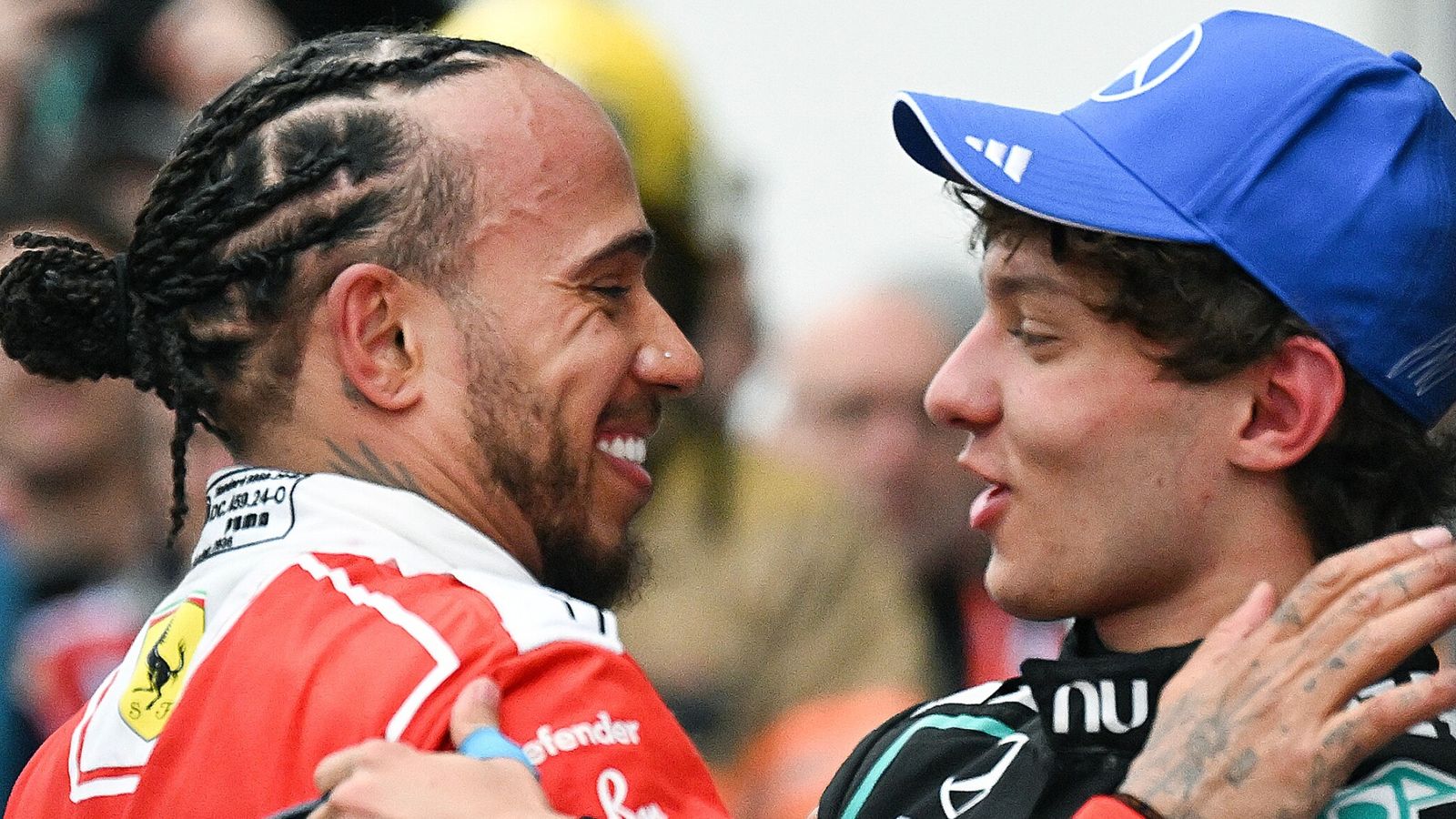
As Formula 1 arrives at the Hungaroring for the final round before the summer hiatus, Scuderia Ferrari and Lewis Hamilton face an operational imperative: converting cornering downforce efficiency into race victory. Mercedes rookie Kimi Antonelli currently commands the Drivers' Championship with a 45-point buffer over Hamilton and a 50-point margin over teammate George Russell, following Antonelli's strategic recovery victory over Charles Leclerc at Circuit de Spa-Francorchamps.
Across the preceding four rounds, Ferrari and Mercedes have divided honours with two victories apiece. While the Mercedes package has demonstrated superior outright straight-line velocity across power-sensitive venues such as Silverstone and Spa, the Hungaroring's tight, contiguous layout shifts the engineering balance toward low-speed mechanical grip and aerodynamic downforce—a technical profile where the Ferrari chassis has consistently benchmarked the field.
Chassis Dynamics and Aerodynamic Load Shift the Advantage
McLaren team principal Andrea Stella identified the upcoming double-header profile in Budapest and Zandvoort as territory tailored to the Scuderia's mechanical architecture. "I think in Hungary, the Netherlands we will see the Ferrari being back to probably being the fastest car we see in the corners there. Extremely competitive," Stella noted.

The Hungaroring’s tight radius sequences operate much like structural buttresses, distributing aerodynamic load continuously rather than demanding straight-line energy deployment. With straight-line top speed secondary to medium- and slow-speed stability, Ferrari's package mirrors the mechanical strengths displayed during Hamilton's victory at the Circuit de Barcelona-Catalunya.
"We have to come and fight for that win. I'm hoping we can be [competitive]. I need to come correct this week and make sure I deliver the way I know I can deliver in Budapest."
— Lewis Hamilton
Hamilton holds an all-time record of eight victories in Budapest. However, five-second time penalties in each of the past two Grands Prix compromised his race execution, leaving him without a podium challenge since his Spanish triumph.
Paddock Caution: Leclerc and Vasseur Manage Expectations
Despite technical projections, the Scuderia pit wall remains measured, citing the Monaco Grand Prix where high downforce expectations did not translate into victory against Antonelli’s pole-to-flag run. Upgrades introduced since Monte Carlo have reinforced Ferrari's cornering platform, but tyre temperature preparation remains decisive across high-degradation intervals.
Ferrari team principal Frédéric Vasseur emphasized execution over theoretical superiority:
"You have a lot of performance in the execution on tyre management, tyre preparation, set-up, and the layout of the track. If we do the same quality of job as this weekend, it will pay off, but it is not a given... Each weekend we are starting from scratch."
— Frédéric Vasseur
Leclerc echoed that analytical caution, noting that extracting maximum performance from the baseline setup without over-indexing on track suitability remains Ferrari's primary objective as they attempt to reduce Antonelli's championship advantage before the mid-season break.